
In Conversation with Elrea Song
First Prize - Conceptual Photography
1st Place
1st Place
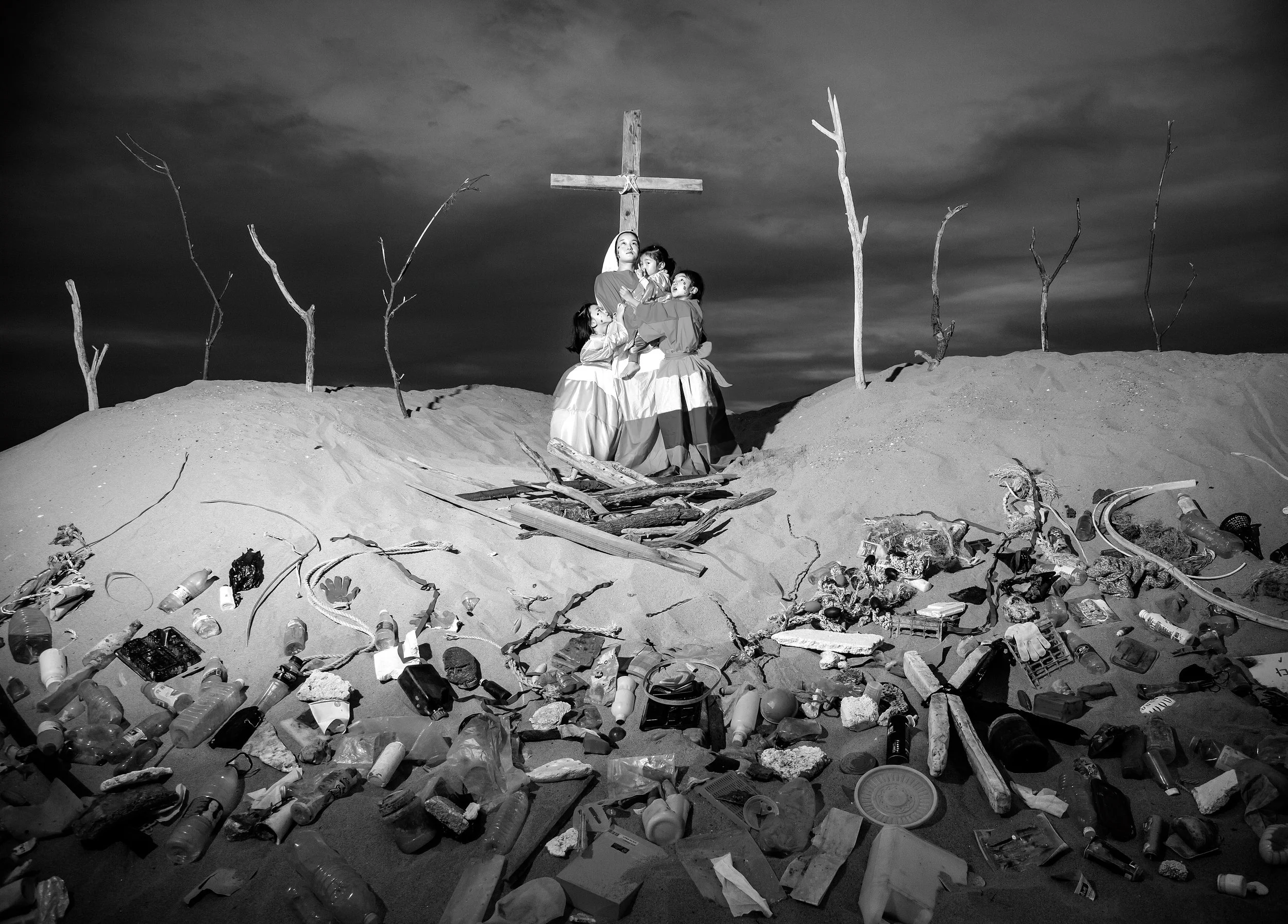
Flaming Hills
Elrea Song / South Korea
Photograph Description:
On the weight of labour and suffering experienced by women, passed down to the next generation, and nevertheless, the presence of persistent hope.
Biography:
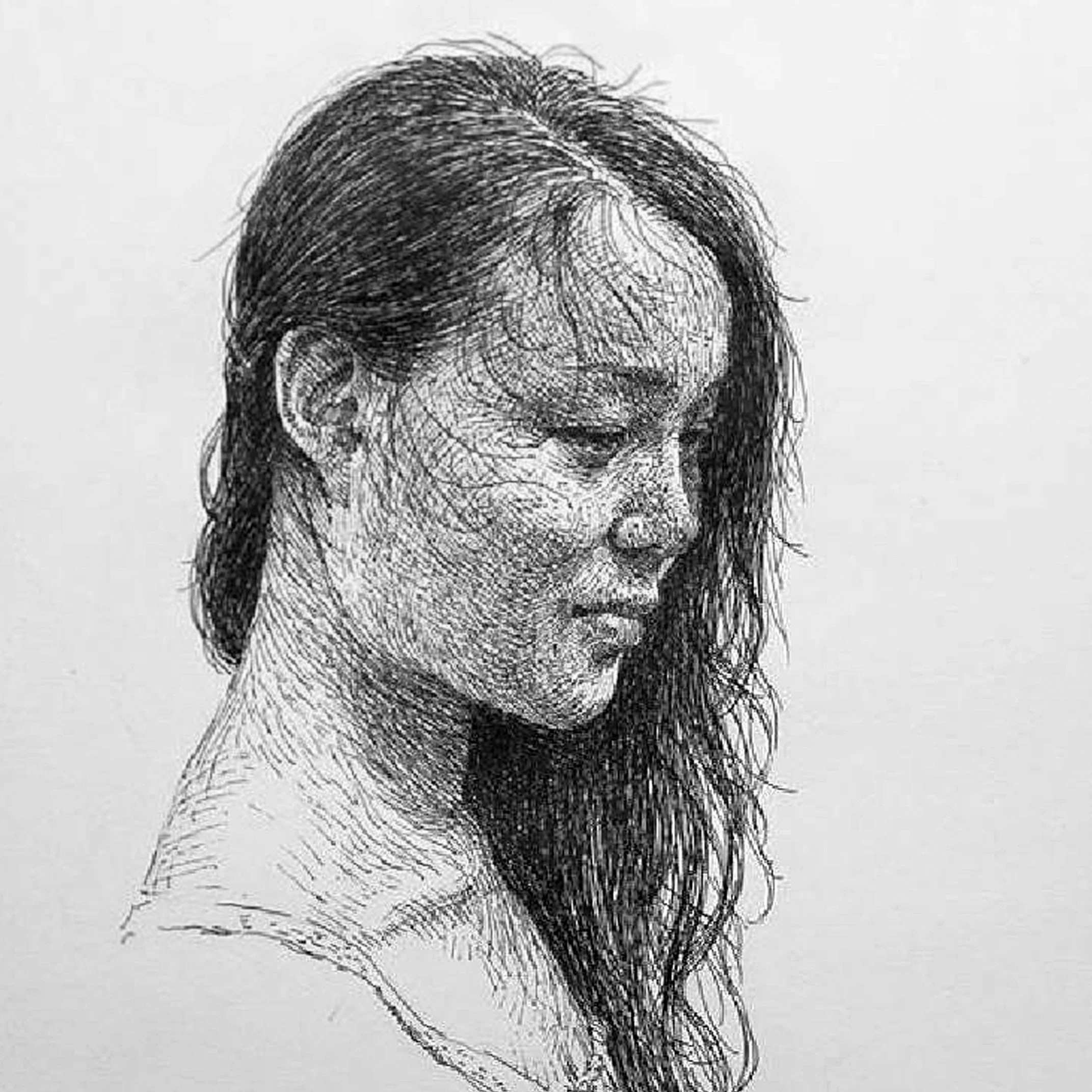
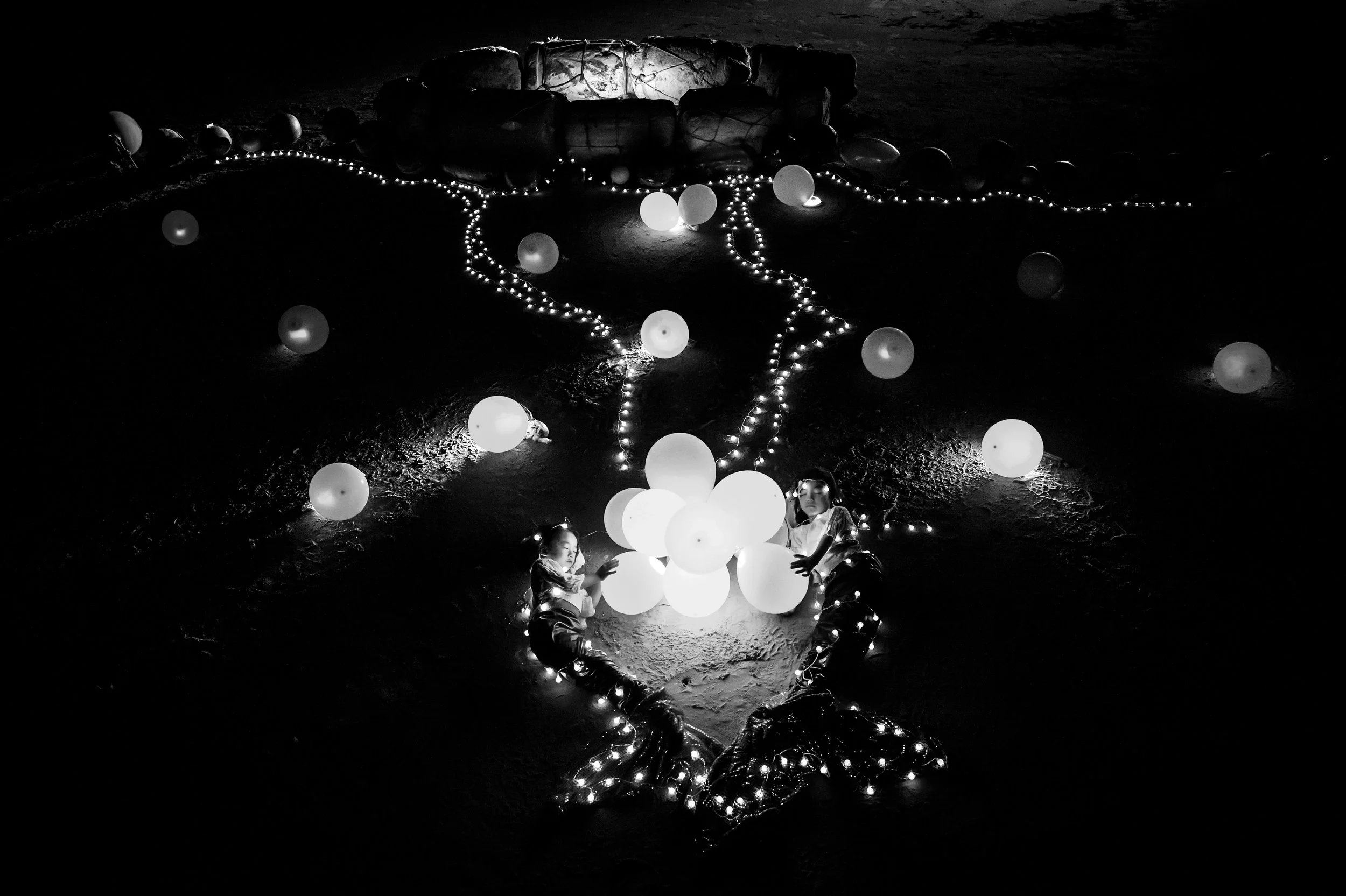
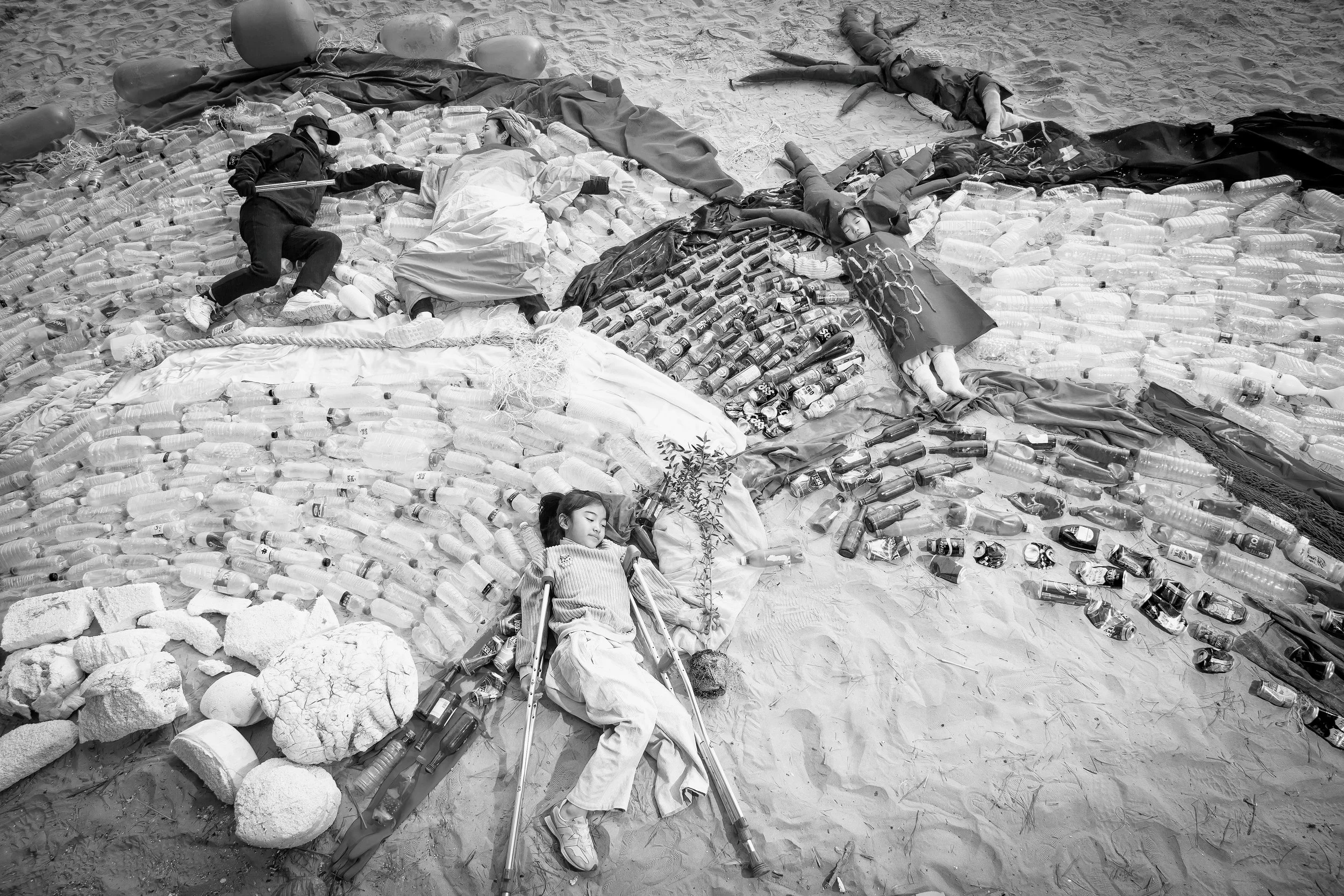
Elrea Song is a South Korea-based photographer. Her series "Combing Peace" was created in collaboration with eight family members, collecting rubbish washed ashore on Korean beaches, imagining different forms of peace and weaving them into visual stories.
Where Stories Meet the Sea
Following her First Prize at the inaugural edition of EVI MONO AWARDS for Flaming Hills, we speak with her about artistic identity, the meaning of photography, the relationship between humanity and nature, and the possibility of finding solidarity through art.
01. Artistic Identity
How would you describe yourself as a photographer? What themes, subjects, or ideas are you most interested in exploring through your work?
I describe myself as a visual storyteller who blends documentary with staged photography, bringing imagination into real-life stories about people and nature to create a visual language of my own. Through new encounters, I hope viewers can explore the traces of people’s lives in my photographs and share the quiet joy of inner intimacy that comes from storytelling.
Lately, the core theme I explore is the inseparable bond between humans and nature. My ongoing project, Combing Peace, gathers story fragments from our global community, where ecological crises and social injustices are deeply intertwined.
This work finds its voice by bringing real documentation together with staged scenes. Using marine debris collected from the shore alongside news archives, I reshape discarded fragments to reflect the uncertain crises of our time. On a colorful yet unnatural stage where nature and waste collide, I speak for ecological peace through the innocent sensibility of a child.
02. Education and Creative Development
How have your studies and educational background influenced your approach to photography and the way you develop your projects?
I went through the regular public school system in South Korea and graduated with a degree in Visual Communication Design from an art university. From childhood through my teenage years, I lived an ordinary life without any particular people or events that introduced me to art or influenced me creatively. However, as a child in Korea, I often traveled to the mountains and the sea with my family and relatives. Looking back, the memories of those moments captured on a simple point-and-shoot camera kept sparking my small imagination.
I believe my project, Combing Peace, grew out of those memories connecting together like a horizon. Building on the structures of the real world, I wanted to tell stories that imagine the inner lives of others. I am also deeply interested in what art actually does in our daily lives. While art cannot completely save my life or someone else's, I believe it acts as a bridge-one that heals us, guides us in a better direction, and brings small meanings and joy into our lives. Guided by this belief, I wanted to pass down my childhood memories to my nieces and nephews. Looking back, I realize that the sea and creating art together were the only spaces where the fractured spirits of my family could come together and heal.
03. Encounters and Memory
Do the stories of the people you photograph stay with you after a project is finished? Have these encounters ever influenced your subsequent work or inspired new ideas?
I feel like one project always leads naturally into the next. Before Combing Peace, my work focused on stories of my own family, so this project grew organically out of that. Likewise, the new project I am working on alongside Combing Peace came naturally from spending so much time in coastal villages-it led me to tell the stories of the people living along the shore.
When I first conceived Combing Peace, I realized I was telling the stories of people I had rarely ever met in person. Most of the time, we come across the diverse lives of others through books, films, the news, or stories passed down by someone else. While I want to share and understand the pain in other people’s lives, I sometimes feel afraid that the reality of it might be too heavy for me to bear. So, to make those pearl-like stories a part of myself, I chose a way of retelling others' stories by adding a small touch of my own imagination.
Even so, the encounters that move me most deeply are, of course, with the people I have actually met, talked with, and hugged in person. The stories of the people from these projects stay inside me, still shining brightly and serving as gentle guides in my life. Every day, I dream that my ongoing projects will continue to lead me toward the faces of people I have yet to meet.
Rooted in the landscapes and coastal memories of South Korea, Elrea Song brings documentary photography and imagination together, exploring the delicate relationship between humanity and nature.
Rooted in the landscapes and coastal memories of South Korea, Elrea Song brings documentary photography and imagination together, exploring the delicate relationship between humanity and nature.
04. Photography and Meaning
Do you believe photography needs to communicate a particular message or address an important issue? Or can an image be meaningful without offering a clear interpretation?
I don’t believe a photograph must always carry a specific message or address a heavy issue. In fact, I think a photograph can hold deep meaning and life on its own, even without a clear interpretation.
I love photography with a strong message-images like photojournalism that move me, tell a story within the frame, and make me want to know more about the world beyond it. At the same time, I also love the act of taking a photo with no message at all-just capturing a moment without any clear intention or explanation. Perhaps the reason so many people love photography is precisely because anyone can take and keep a picture without needing a message.
Ultimately, I believe every photograph carries its own story. Even without a fixed interpretation from the photographer, the moment a photograph is shared and meets a viewer’s own experiences and thoughts, it takes on a new message. As an artistic medium, photography comes alive through that strong interaction between the story inside the frame and the person looking at it. That is why I carry a quiet hope that one day, if I am able to let go of all messages and intentions in my own pictures, it will open up a whole new path into a completely different world.
05. Sources of Inspiration
Where do you usually find inspiration for your photographs? Does an idea begin with a particular image, experience, or question you want to explore?
Because I value intuition and sincerity, I prefer to observe and wait to see where my heart naturally flows. Ultimately, what moves me toward a new project begins with recognizing something I have deeply longed to do inside myself for a long time. Responding to what my body and soul have been yearning for can feel quite unfamiliar and takes real courage. I keep asking myself why I need to take on this new work, even though I can never know all the answers. Still, I begin the work because I want to keep following those questions-hoping to reach some form of understanding along the way.
I am drawn to working in new places where skin brushes against skin and voices mingle, so my stories naturally flow according to the people and places I encounter. Looking closely at my limits, then standing back up and persisting to move beyond them, becomes the creative process itself-and a source of new inspiration.
06. Photography and the Environment
What role do environmental concerns and the relationship between humanity and nature play in your photography? Do you see photography as a way of encouraging reflection on these issues?
I want my life and my art to walk side by side in the same direction. Because life is far more imperfect and unsteady than my artwork, art often serves as a milestone that guides me forward. When I first started the Combing Peace project in 2020, I made up my mind to turn my entire life toward nature. Looking back now, six years after making that promise, I realize how hard it has been to change even my own life, and that hardly anything has truly improved regarding the problem of trash. Even within my relationship with nature, I found myself struggling over small human problems, unable to make any real, positive impact on the natural world.
Even if I cannot fix the environmental crisis, a quiet, steady resolve to keep showing up and practicing this like a daily habit is what keeps me going. Right where I stand, I try to change bit by bit, and keep moving slowly toward something further ahead.
For South Korean photographer Elrea Song, the boundaries between documentary photography and imagination are fluid. Through carefully constructed scenes, personal memories and encounters with the natural world, she explores the connections between human experience, ecological concerns and social responsibility.
“I want my life and my art to walk side by side in the same direction.”
- Elrea Song
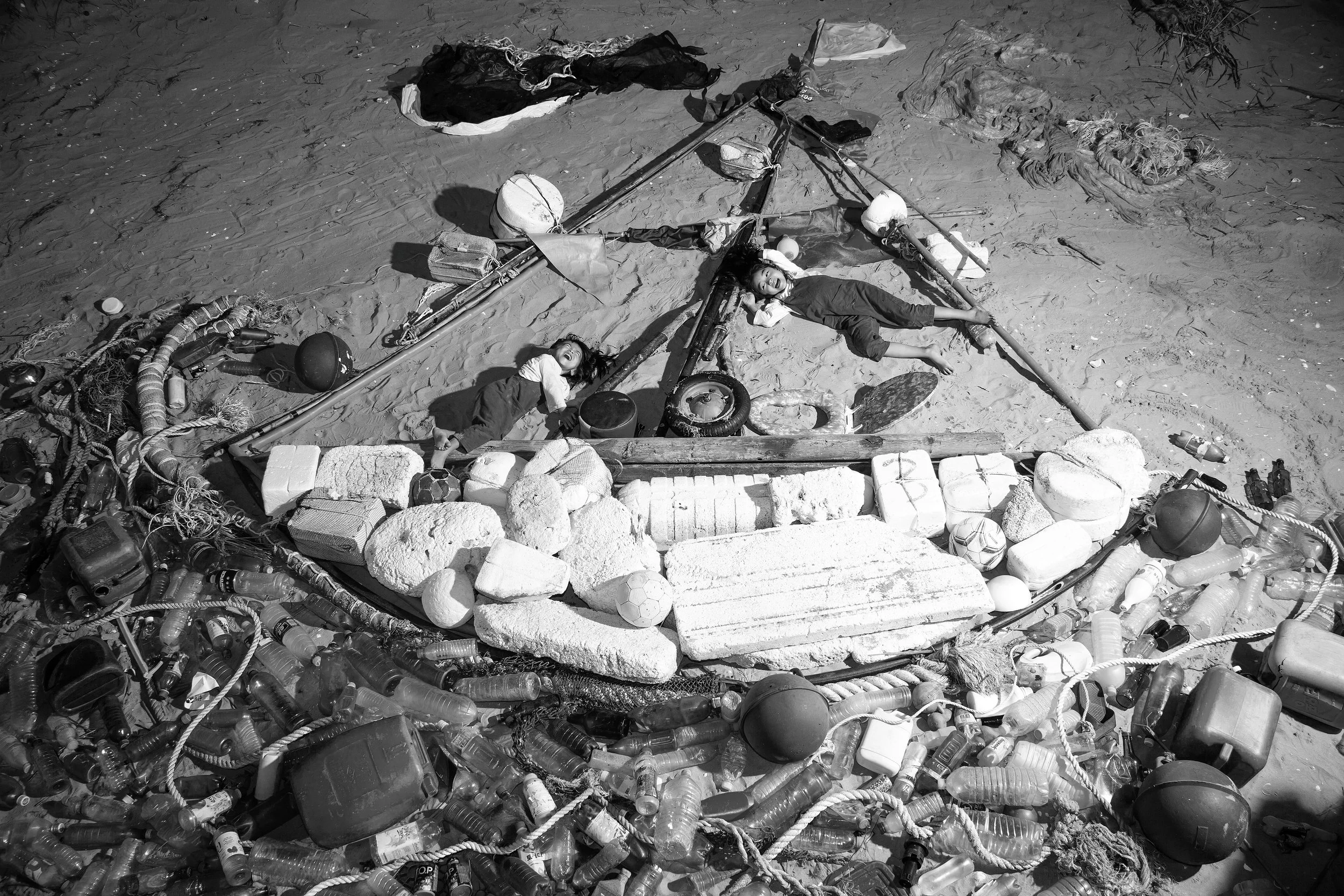
07. Flaming Hills
Could you tell us about the creative process behind your award-winning photograph, Flaming Hills? How did you develop its composition, and what ideas or experiences shaped the final image?
I staged Flaming Hills in 2022 using marine debris I collected along a beach on South Korea’s East Coast. At the time, off-road sand racing was trending, and large artificial sand dunes had been piled up on the beach. When I saw them, I knew right away that I wanted to photograph my scene atop those hills.
During that period, I was deeply troubled by urgent social issues in Korea-women being driven to their deaths by domestic and dating violence, and LGBTQ+ individuals facing intense public hatred. As I recall, while many conservative Christian groups-led predominantly by male pastors-mounted aggressive attacks, it was largely women and queer communities who stood together, meeting that hatred with resilience and grace. Because gender-based issues continue to persist today in ever-shifting forms, I conceived this work around what it means to live in society as a woman, a minority, or a child. Drawing from the memory of an old painting I had seen in a book depicting the burning of ancient martyrs at the stake, I wanted to portray women standing together defiantly-burning brightly in solidarity and resistance, even upon the world’s judgment stand.
08. The Viewer's Perspective
What kind of response do you hope to evoke in viewers when they encounter Flaming Hills? How important is it to you that they understand your original intention?
Because of the visual impact of placing marine debris and children in the same frame, the Combing Peace project can feel intense or even uncomfortable at first glance. However, I am very careful not to make viewers feel burdened by guilt or self-blame. Instead, I hope this photograph serves as a quiet catalyst-inviting people to pause for a moment and reflect on where humans truly stand within nature, and how our complex social struggles appear when placed before the vastness of the natural world.
At the same time, I do not think it is essential for every viewer to grasp my exact original intention. It is nearly impossible for an artist to pour every single thought into a single image, and I believe that when viewers discover unexpected meanings I never planned, that is the true joy and synergy of art and communication. Although Flaming Hills began from my own deep questions and concerns, I am more than happy if viewers look at the frame and freely read their own stories into it.
09. Artistic Responsibility
Do you feel a sense of responsibility towards the people, places, or issues you photograph? How does this influence the decisions you make during your creative process?
Yes, I feel a heavy sense of responsibility in the way I look at people, places, and social issues through my camera. That responsibility directly shapes the decisions made throughout my entire creative process, including whether or not to share a photograph publicly.
When it comes to people, rather than capturing others from a distance, I prefer to build deep relationships and invite those in front of my lens to participate as active collaborators. That is why my work mostly involves people close to me. The eight individuals featured in Combing Peace are not mere models-they are close companions who walk the beach with me, pick up trash, build the scenes, clean up afterward, and share their own ideas.
Places and issues require a similarly careful approach. I intentionally do not name the exact locations where I photograph, so as not to invite unfair judgment or misunderstanding toward a specific town. Solving environmental and social problems requires looking at and changing larger systems-not turning a particular place or its people into a target of blame.
10. Looking Forward
Are you currently working on any new projects? Are there themes or directions you would particularly like to explore further in your photography?
First, I am preparing to present new works from the Combing Peace project around next year, while also documenting and weaving this journey into a documentary film. Learning and making a documentary film through a workshop has led me to rethink the structure, form, and attitude of storytelling in my photography as well. Experimenting with ways to structure these stories well will hopefully allow the stories inside my photographs to come across even more clearly. If the opportunity arises, I would love to follow the ocean currents across the sea to meet regions and people across Asia, and try new creative approaches together. Joining hands with grassroots environmental communities and artists along neighboring shores connected by these vast waterways, and exchanging stories of everyday life to build a quiet solidarity for ecological peace, is my next dream.
In Conversation is an editorial series by EVI MŌNO AWARDS exploring the individuals, ideas and personal perspectives behind award-winning photographs.
This is a non-commercial editorial project, produced without financial gain.